Milwaukee's climate, long cold winters, short humid summers, ice storms, and a heavy oak and ash canopy, makes timing everything for tree pruning. The wrong month can spread disease, stress the tree, or waste your money. The right month heals cleanly, strengthens structure, and prevents future storm damage.
Below is the calendar we follow on Milwaukee-area properties, cross-referenced with Wisconsin DNR Forest Health guidance for oak wilt and emerald ash borer.
The Master Rule: Prune in Dormancy
For nearly every deciduous tree in Milwaukee, the best pruning window is late winter through early spring, roughly mid-February to early April. The tree is dormant, sap flow is minimal, insect and fungal pressure is at its lowest, and wounds callus over quickly once spring growth begins. Working through bare branches also makes it far easier to see structure and make correct cuts.
Exceptions exist, and they matter, but if you remember one thing, remember this: when in doubt, prune in late winter.
Month-by-Month Pruning Calendar for Milwaukee
January, Full Dormancy
Ideal for heavy structural pruning of most shade trees. Frozen ground protects turf and garden beds from equipment damage. Great time for large oak work.
February, Peak Pruning Season Begins
Best month of the year for most trees. Prune apples, pears, ornamental crabapples, and most hardwoods now. Structural pruning on young trees is especially effective.
March, Finish Before Bud Break
Continue major pruning until buds start swelling. Avoid maples and birches this month (heavy sap bleed). Last safe window for oak pruning before oak-wilt season starts.
April – October, Oak Wilt Danger Zone
Do not prune oaks. Sap-feeding beetles that spread the fatal oak wilt fungus are active. A fresh cut can attract them within hours. Wisconsin DNR is very firm on this, any oak cut in this window (including from storm damage) must be sealed immediately with pruning paint.
May – June, Light Work Only
Remove dead, broken, or hazardous limbs as needed. Avoid heavy pruning, trees are pushing new growth and any cut is a wound that has to heal while the tree is also trying to leaf out.
July – August, Maple & Birch Window
Late summer is the second-best window for maples, birches, and other heavy-sap species. Sap flow has slowed and wounds close well before winter. Good time to remove suckers and water sprouts.
September – October, Avoid Major Cuts
Trees are storing energy for winter. Major cuts now can stimulate new growth that won't harden before the first hard freeze. Save real pruning for November onward.
November – December, Oak & Cleanup Season
Oak-pruning window reopens once trees drop leaves and beetles are dormant. Post-storm cleanup and light structural work on all species is fine.
Species-Specific Guidance for Common Milwaukee Trees
Oak (Red, White, Bur, Pin)
Prune November through March only. This is not optional in southeast Wisconsin. Oak wilt has killed thousands of Milwaukee-area oaks and is spread almost entirely by in-season pruning cuts and storm wounds. If a storm breaks an oak limb in July, seal the wound the same day.
Maple (Silver, Sugar, Norway, Red)
Best pruned in late summer (July–August) or full dormancy (December–January). Silver maples are Milwaukee's most storm-vulnerable common tree, structural pruning every 3–5 years dramatically reduces limb-failure risk.
Ash (Green, White, Black)
Only worth pruning if the tree is on an active emerald ash borer treatment program. Prune in late fall or winter to avoid EAB flight season (May–September). Untreated ash trees should be assessed for removal, see our EAB guide.
Apple, Pear & Fruit Trees
Prune in February or early March, before bud swell. Fruit trees need annual pruning to stay productive and to maintain an open canopy that resists fungal disease during Milwaukee's humid summers.
Birch
Prune in midsummer only. Winter or spring cuts bleed heavily and attract bronze birch borer, which is a serious pest in southeast Wisconsin.
Evergreens (Pine, Spruce, Arborvitae)
Prune in late spring after new growth ("candles" on pines) emerges. Never remove more than one-third of live foliage in a single year.
What Tree Trimming Costs in Milwaukee (2025)
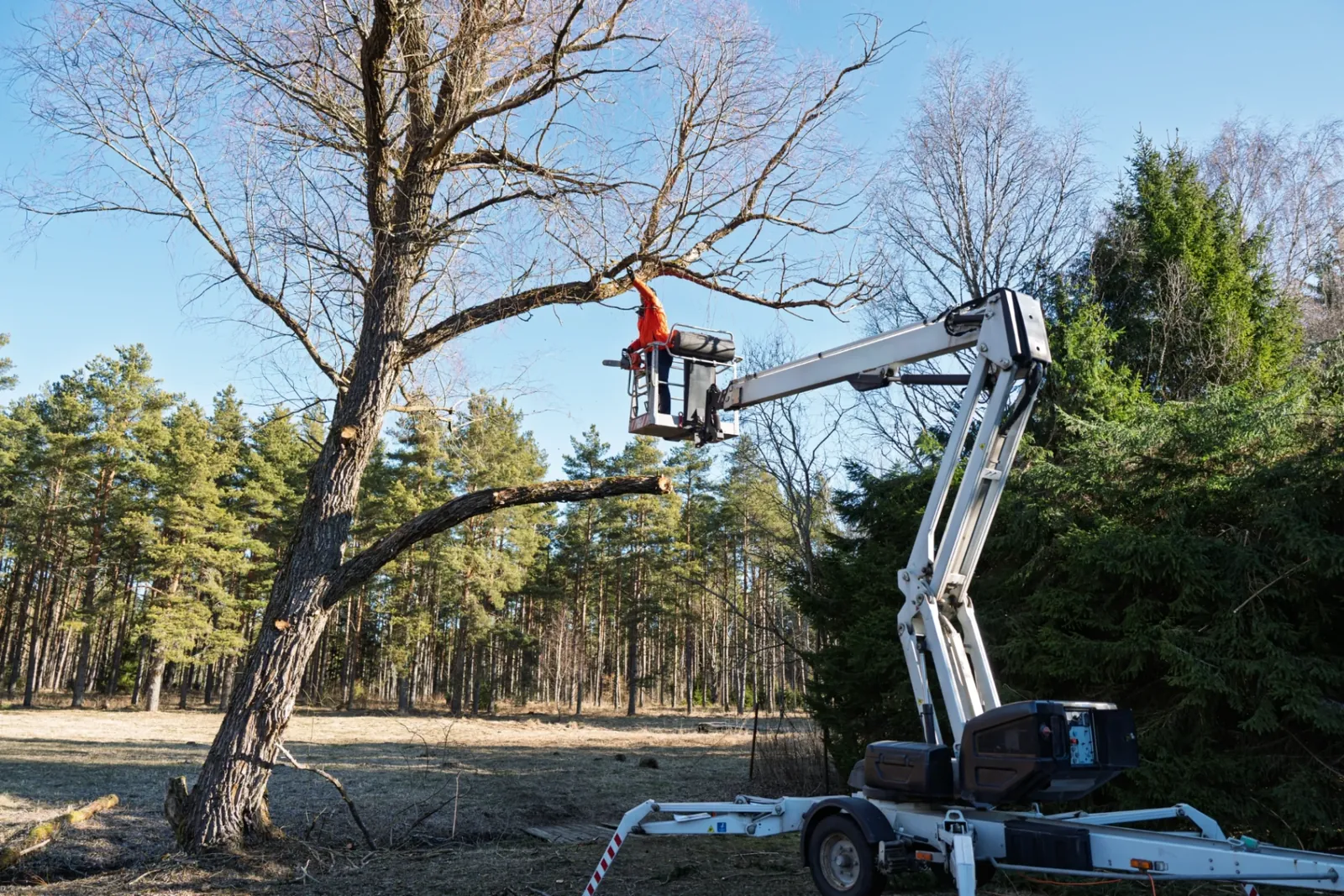
Most Milwaukee homeowners spend between $250 and $1,200 per tree for professional trimming. Small ornamental trees or a single low limb may run $150–$250. Large mature oaks, maples, or elms that require bucket-truck access, traffic control, or extensive debris hauling often fall in the $800–$1,500 range.
Typical Milwaukee Tree Trimming Price Ranges
- Small tree (under 25 ft): $150 – $350
- Medium tree (25–45 ft): $350 – $750
- Large tree (45–65 ft): $750 – $1,500
- Very large or hazardous tree: $1,500+
What Drives the Cost
- Tree size and canopy spread: More wood and more cuts mean more time and crew.
- Access: Front-yard trees with open access cost less than backyard trees in fenced yards or tight Milwaukee lots.
- Proximity to structures or power lines: Work near houses, garages, or overhead lines requires extra rigging and safety setup.
- Debris removal: Hauling branches and chipping adds labor and disposal fees.
- Seasonal demand: Spring and post-storm periods are busiest; winter off-peak pruning can sometimes be priced more favorably.
Why Estimates Are Free (and Worth Getting)
Every property is different. A phone quote can give you a range, but an on-site estimate is the only way to see access, structure proximity, and the tree's actual condition. We provide free estimates for Milwaukee-area homeowners so you know the exact scope and price before any work begins.
When to Skip DIY and Call a Pro
- Any cut requiring a ladder, chainsaw, or work near power lines.
- Any oak that needs work between April and October.
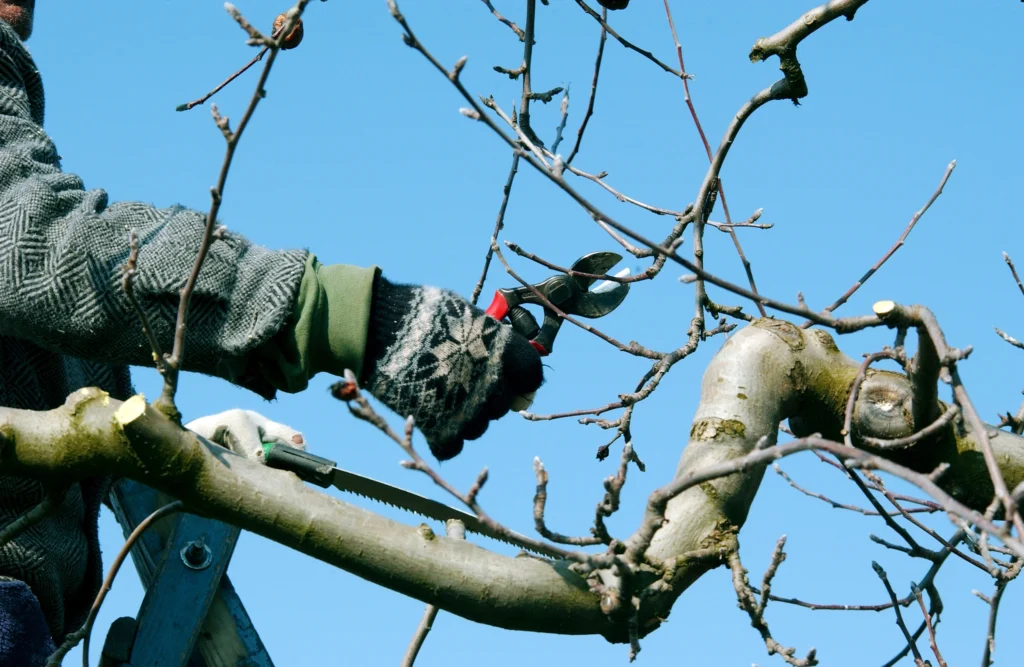
- Large limbs (over ~4 inches) that need proper three-cut technique.
- Storm-damaged trees where full damage isn't visible from the ground.
- Structural pruning on mature shade trees, one wrong cut can shape a tree badly for decades.